
Hands-On Phonics for Struggling Readers: Free Word Jail Game

📌Quick Navigation
Hands-On Phonics for Struggling Readers
Hands-on phonics for struggling readers does not mean skipping phonics or lowering expectations. It means teaching the same important reading skills with more visual, tactile, and movement-based support so children can see, touch, build, and connect with the lesson.
When Phonics Feels Impossible: Why Some Bright Kids Need a Visual, Hands-On Approach
If you are teaching a bright child who has become one of those “struggling readers,” this does not mean they cannot learn, they just need more support.
Have you ever sat down with a beautifully planned phonics lesson, a checklist, a roadmap, or a set of flashcards and thought, This should be working?
The lesson is simple.
The steps are clear.
The child is bright.
You explain the sound. You model the blend. You ask them to repeat it.
And then everything stops.
The child freezes.
The sounds do not seem to connect.
The letters do not seem to "stick."
The blending feels impossible.
If you are a parent or teacher watching this happen, it can feel discouraging. You may wonder if you are doing something wrong. You may wonder if the child is not trying. You may even start to wonder if phonics can work for them.
But here is what I want you to know:
A child who struggles with phonics and reading is not broken.
A child who needs a different path is not behind in worth, ability, or potential.
And phonics does not have to be taught through listening and repeating alone.
For many children, especially children with auditory processing challenges, dyslexia symptoms, language delays, or other learning differences, the issue is not that they cannot learn to read.
The issue may be that the lesson is entering through a doorway that is hard for their brain to use.
Why "Just Listen and Repeat" Does Not Work for Every Child
Traditional phonics is often introduced in a very auditory way.
The adult says a sound. The child repeats the sound. The adult blends the sounds. The child tries to blend them back.
For many children, that works beautifully.
But for some children, spoken sounds move too quickly. The sound is said, and then it is gone. There is nothing solid to hold, see, touch, move, or study.
Children with Auditory Processing Disorder may have difficulty processing spoken sounds clearly or quickly, even when their hearing is normal. That can make listening-only reading instruction harder to access, especially when a lesson depends on hearing, remembering, and blending sounds in quick succession.
So when a child cannot easily process rapid spoken sounds, a purely auditory approach may leave them feeling defeated.
That does not mean phonics is useless.
It means we may need to change the way phonics is delivered.
Try using visual supports, hands-on learning tools, and other story-based approaches to help make information easier to access.
A Phonics Roadmap Shows What to Teach but Not Always How to Teach It
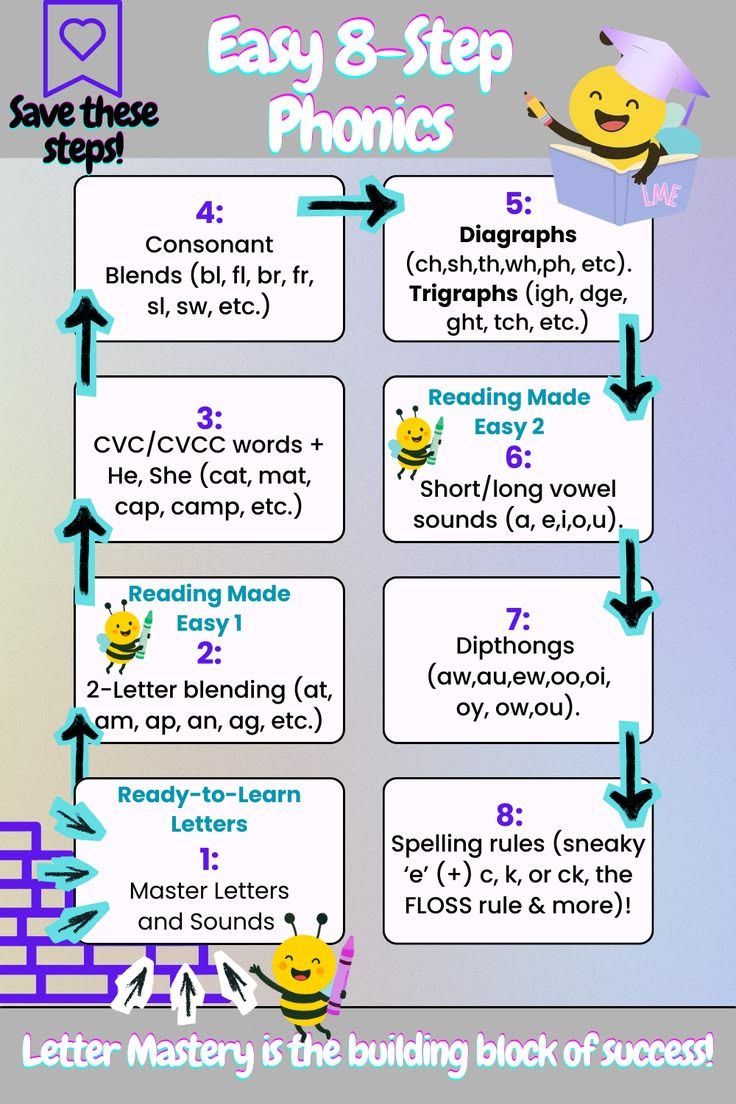
Our 8-step phonics roadmap is helpful because it gives parents and teachers a clear order.
It answers questions like:
What should we teach first?
What comes next?
When do we move from letters to blending?
How do we build toward reading words and sentences?
But a roadmap is not the whole lesson.
A roadmap tells us where we are going.
The teaching tools are what help the child actually get there.
For some children, a phonics roadmap taught mostly through listening, repeating, and verbal blending may not be enough. They need the lesson brought to life with visual, tactile, and hands-on supports.
That is where multisensory structured literacy becomes so important.
Structured Literacy is described by the International Dyslexia Association as explicit, systematic, and cumulative instruction that helps students who struggle with reading and spelling. It is often connected with multisensory teaching methods that use visual, auditory, kinesthetic, and tactile pathways together.
In simple language, that means:
We do not just tell the child.
We show the child.
We let the child move it, build it, trace it, match it, sort it, and experience it.
When Listening Is Hard, Use the Eye and the Hand
Spoken sounds disappear the moment we say them.
But a letter tile stays on the table.
A picture card stays in front of the child.
A cut-out letter can be moved, touched, sorted, and placed.
A tracing path gives the hand something to remember.
A visual story gives the brain something meaningful to hold onto.
This is why visual and tactile anchors are so powerful.
For a child who struggles to process sounds quickly, a visual anchor slows the lesson down. It gives the brain more time. It turns something abstract into something concrete.
Instead of asking the child to only hear the sound, we can help them:
See the Letter.
Touch the Letter.
Trace the Letter.
Build the word.
Match the picture.
Move the sound into place.
Connect the pattern to a story.
That is not "less than" phonics.
That is phonics made accessible.
Helping My Son Learn Through Visual Stories
This part is personal for me. My oldest son did not become a strong reader because everything was easy from the beginning.
There were hard days.
There were moments when I had to step back and ask, How can I make this make sense to him?
Prayer helped me through those days. I believed he could learn. I just had to keep looking for the method that worked for him.
One thing I've learned is that abstract phonics rules can be incredibly difficult for some children to remember through repetition alone.
Rules like silent e, vowel teams, and "rule breakers" can feel random on a worksheet.
A child may hear the rule ten times and still forget it when they see the word on the page.
So I started turning rules into visual stories.
One of our favorites was Sneaky E.
Instead of only saying, "The silent e makes the vowel say its name," I turned the rule into a character and a story. Sneaky E was a rule breaker who had to go to jail, so he had to stay completely quiet at the end of the word.
Now the rule was not just a sentence.
It was a picture.
It was a memory.
It was a story.
It was something my child could see.
Because children remember stories. They remember characters. They remember silly pictures, colorful posters, and hands-on games.
A child who forgets a black-and-white rule may instantly remember a visual story.
Over time, those visual stories helped him connect the spelling patterns to meaning. They gave him something to hold onto while his reading confidence grew.
And today, Isaiah is a beautiful, confident reader who understands what he reads.
That is the part I want parents to hear.
Not every child learns on the same timeline.
Not every child learns through the same method.
But children can learn when we keep looking for the right approach.
Turn Tricky Words Into a Game
One of the best things I learned while teaching my own son is this: sometimes children need more than an explanation. They need something they can see, touch, move, and play with.
That is exactly why I created this simple Rule Breaker Word Jail printable.
Years ago, I used to hand draw a little “word jail” for my son. When we came across a tricky word that did not follow the usual phonics pattern, we would put it in “jail,” talk about the unusual part, and practice it together. That simple visual made abstract reading rules feel much more concrete, memorable, and even fun.
Instead of just telling a child, “This is a rule breaker word,” you can let them interact with it.
They can:
place the word in jail
say the word aloud
notice the tricky part
talk about why it does not follow the usual pattern
build and rebuild words over time
For many children, especially those who benefit from visual and hands-on learning, this kind of playful practice can make a big difference.
Free Printable: Rule Breaker Word Jail Game

To help you bring this idea to life at home or in the classroom, I created a free printable Rule Breaker Word Jail Game for you.
This printable includes:
Page 1: a full-page Rule Breaker Word Jail poster
Page 2: rule breaker word cards you can cut out and use right away
Pages 3–4: letter cut-outs so your child can build new tricky words over time and create their own word jail words
This is a simple, low-pressure way to practice high-frequency tricky words while giving your child a visual anchor they can remember.
How to Use It
You do not need a long lesson for this to be effective.
Just choose one word at a time.
Put the tricky word in the jail.
Read the word together.
Talk about the part that does not follow the usual pattern.
Practice the word again later.
Use the letter cut-outs to build more tricky words together.
You can keep it playful, short, and encouraging. The goal is not perfection in one sitting. The goal is helping your child build connection and confidence over time.
Download the Free Printable
If you are looking for hands-on phonics for struggling readers, this free Rule Breaker Word Jail game is a simple way to make tricky words more visual, concrete, and memorable.
When a child needs more than “listen and repeat,” this printable is a fun way to add visual and hands-on support to your reading time.
Download the free Rule Breaker Word Jail Game printable below and start building tricky words together.
What a Visual, Hands-On Phonics Lesson Can Look Like
A strong phonics lesson does not have to be complicated.
Here are a few ways to move beyond "listen and repeat" and help children connect with phonics in more visual, hands-on ways.
1. Use Tactile Cut-and-Paste Activities
Cut-and-paste work is not just busy work when it is done intentionally.
When a child cuts out letters, moves them around, and places them in order, the brain has to notice sequence, shape, direction, and placement.
That matters for reading.
The child is not only seeing the word.
They are building the word.
They are physically placing the letters in order, which helps create a stronger memory of how the word works.
2. Use Matching Games
Matching games help children connect letters, sounds, pictures, and meaning.
For example, a child may match:
A letter to a picture.
A beginning sound to an object.
A word family to a group of words.
A spelling pattern to a visual cue.
This gives the child more than one way to access the lesson.
They are not relying only on memory from hearing the sound. They are using visual comparison, pattern recognition, and meaning.
3. Use Manipulatives Instead of Only Flashcards
Flashcards can be helpful, but some children need more than looking and answering.
Letter tiles, blocks, magnetic letters, sound boxes, and movable pieces allow children to interact with the lesson.
They can move the letters.
Swap the beginning sound.
Build a new word.
Break a word apart.
Put it back together.
This kind of movement helps make reading more concrete.
4. Turn Abstract Rules Into Visual Stories
Some phonics patterns are difficult because they feel invisible.
Silent letters, vowel teams, bossy r, soft c and g, and other patterns can be confusing if they are only explained verbally.
But when we turn those rules into visual stories, children have something to remember.
A character.
A poster.
A color.
A silly rule.
A repeated phrase.
A picture in their mind.
That story becomes a bridge between the rule and the word.
5. Keep the Structure, But Change the Delivery
When a child is struggling, we do not have to throw away structure. In fact, many struggling readers need more structure, not less. We just need to change how that structure is delivered.
It is helpful to teach using a clear phonics sequence to teach letter sounds, blending and working on decoding practice. Some children may need those skills taught with more visual, tactile, spatial, and hands-on support.
Learning Is Not One-Size-Fits-All
One of the biggest mistakes we can make is assuming that all children should learn the same way.
Some children hear a sound once and remember it.
Other children need to see it, touch it, build it, trace it, move it, and connect it to a story before it makes sense.
That does not mean they cannot learn.
It means they need a better bridge.
At Learning Made Easy, we care so much about hands-on, visual, and tactile learning.
Our phonics roadmap gives parents and teachers a clear path, but the heart of the program is in the activities that help children actually connect with the lesson.
Because reading should not feel like a wall a child keeps running into.
It should feel like a path we can walk together, one step at a time.
A Final Word for the Parent Who Is Tired
If you are reading this because phonics has felt impossible for your child,
I want to encourage you.
Your child is not lazy.
Your child is not hopeless.
Your child is not beyond help.
Sometimes the lesson needs to be taught creatively.
Try the visual.
Try the tactile.
Try the story.
Try the hands-on activity.
Slow the lesson down and help your child make concrete connections.
Pray through the hard days and keep believing that progress is possible.
Because children can learn to read with the right approach.
Sometimes the breakthrough comes when we stop asking, “Why won’t this child learn this way?” and start asking, “What doorway does this child need?”
If you are looking for a structured, hands-on way to teach early reading skills, explore the Learning Made Easy phonics path.
Our upcoming Reading Made Easy 1 and Reading Made Easy 2 programs will continue this same hands-on, structured approach beyond letter mastery into blending, decoding, fluency, and comprehension. The goal is simple: help children learn to read with a path they can actually access.
Our lessons are built to help children connect through more than just listening and repeating. With visual anchors, tactile activities, matching games, letter formation practice, and step-by-step phonics support, children are given more than one way to learn.
Join our mailing list to receive free learning bundles, lesson ideas, and hands-on reading support for your homeschool or classroom.
Happy Homeschooling!


📌Frequently Asked Questions (FAQ)
Does a hands-on approach mean we are abandoning traditional phonics?
Not at all. A visual, tactile approach still teaches a systematic phonics sequence, including letters, sounds, blending, and decoding. The difference is in the delivery. Instead of relying only on listening and repeating, we use tools like letter tiles, cut-and-paste activities, stories, visuals, and games to make abstract reading rules easier to see, touch, and understand.
My child has been diagnosed with Auditory Processing Disorder. Can they still learn to read using phonics?
Yes, many children with Auditory Processing Disorder can still learn to read with phonics, but they may need phonics taught in a more visual, structured, and hands-on way. When spoken sounds are hard to process quickly, visual anchors like picture cards, physical letters, word cards, and memory stories can slow the lesson down and give the child something concrete to connect with while they learn.
What exactly is Structured Literacy?
Structured Literacy is explicit, systematic, and cumulative reading instruction. It teaches reading skills in a clear order, building from simple concepts to more advanced ones. This approach is often recommended for students with dyslexia and other reading difficulties because it does not leave reading development to guessing. It gives children direct instruction, repeated practice, and a clear path for learning how words work.
How do visual stories help kids remember tricky reading rules?
Abstract rules, like silent e or vowel teams, can feel random when they are only explained on a worksheet. Visual stories give children something memorable to picture. For example, our “Sneaky E” character stays quiet in word jail, but he still helps the vowel say its name. Now the rule is not just a sentence to memorize, it becomes a story, a picture, and a memory cue.
What ages or reading levels is the free Word Jail printable best for?
The Rule Breaker Word Jail printable is best for early readers, usually kindergarten through 2nd grade, or for any child who is beginning to practice high-frequency words and tricky words that do not fully follow the phonics patterns children have learned so far. Words like said, was, come, of, and one can be easier to remember when children can see, move, build, and talk about the tricky part.


Comments